Wandermio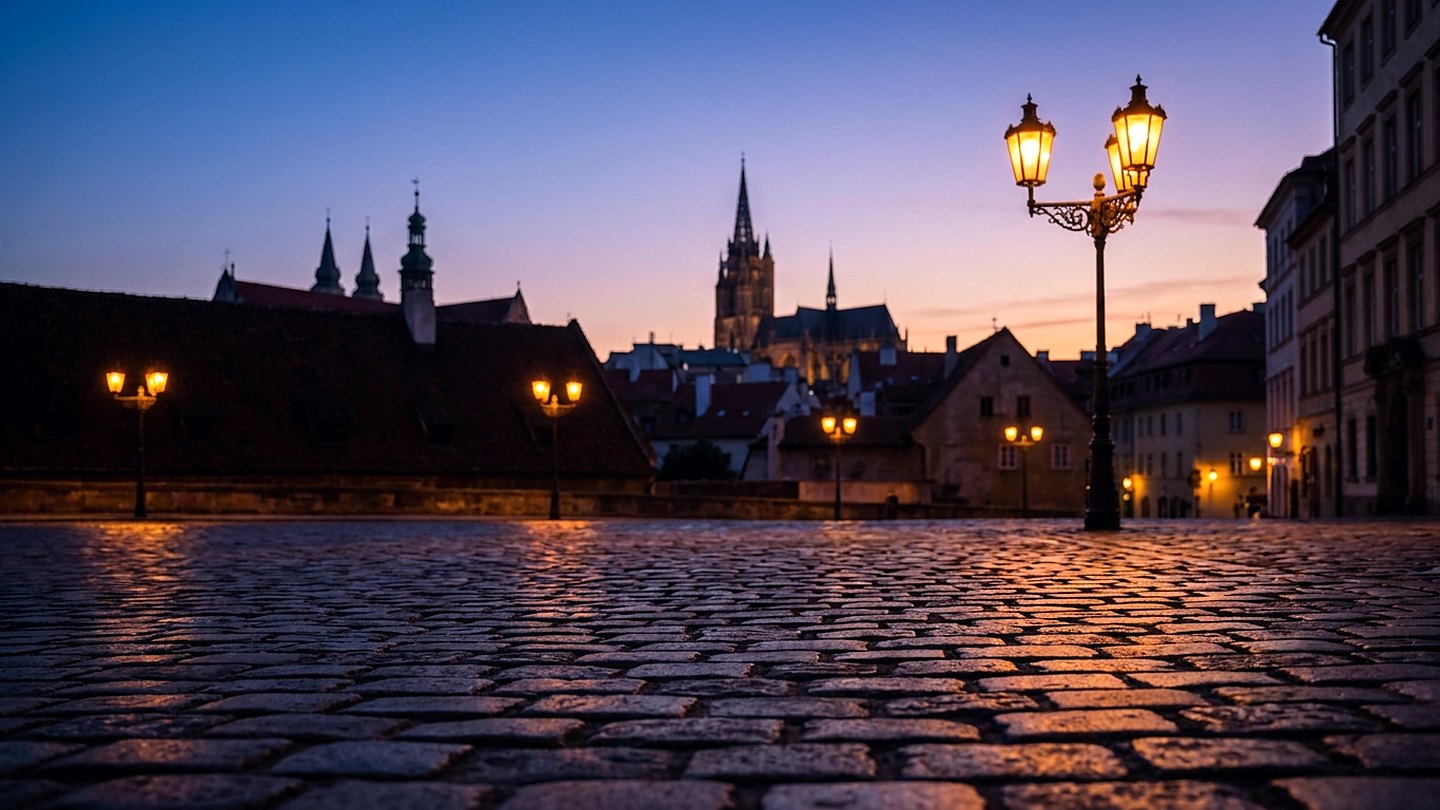
Photographing a City at Dawn
I am not a naturally early person, and I have yet to regret a dawn. The alarm goes off in the dark, the room is cold, the coffee is bad, and then I am standing in a square that held four hundred people the previous afternoon and now holds a street sweeper, two pigeons, and me. Whatever a city is when nobody is performing it, that is what the first hour shows you.
The pictures are also simply better, and for reasons that have nothing to do with virtue. Dawn is the only light of the day that improves while you work. Evening does the opposite: I get maybe twenty good minutes and then I am chasing a fading sky with a rising heart rate. In the morning I can set up in the dark, be wrong about everything, fix it slowly, and still be standing where I should be by the time the good light arrives.
The blue half hour, and why I aim for it
Sunrise is not the appointment. The appointment is roughly forty minutes earlier, when the sky has lifted out of black into a steady, saturated blue while the street lamps are still burning.
That overlap is the whole gift. For a short while the sky and the artificial lights sit close enough in brightness that one frame can hold both, so windows glow amber, wet stone doubles everything, and the sky stays a real color instead of collapsing into an empty hole above the roofline. Half an hour later the sun will out-shout every lamp in the city and that balance is gone until evening.
How long it lasts depends on where you are standing on the map. Near the equator the transition is brisk, twenty minutes and done. Far north in June it stretches so long that it never really finishes. So I find the sunrise time for that date, subtract fifty minutes, and treat that as the hour I need to be in position, camera already on its support, frame already chosen. Arriving early only means standing there a while. Arriving ten minutes late means losing the picture.
Dawn is the only light of the day that improves while you work.
Choosing the corner the night before
The scouting matters more than anything I do in the morning, because before sunrise I am not clever. I am obedient. So the previous evening I go for a slow walk and hand my sleepy self a set of instructions.
I am looking for four things. Which way the street runs, because a street aligned with the sunrise becomes a lit corridor for a few minutes and a street across it stays blue much longer. Which walls face east, since those are the ones that will catch the first sun. Where the water is, because any wet surface, a canal, a fountain basin, even a puddle a delivery truck leaves behind, doubles the picture. And what will block me: the tall new building three streets over that eats the low sun, the scaffolding, the gate that stays locked until eight.
Then I write it on a scrap of paper, because at that hour I do not want to be scrolling and glowing. Three lines is enough: the corner, the direction I face, and the wall to watch. I settle the walking order too, since a good dawn holds two locations at most. One position for the blue, one for the sun, and no more than eight minutes between them. Ambition is what makes people miss both.
Holding on to the color
Left alone, a camera hates blue hour. It looks at a scene lit by orange lamps under a deep blue sky, decides that somebody has made a mistake, and averages the whole thing toward a neutral gray that never existed. The result is a street at dawn that looks like a parking garage.
So I stop letting it decide. I set a fixed color balance somewhere near ordinary daylight and I leave it there. The blue stays blue, the lamps stay warm and orange, and the contrast between those two colors, which is the actual subject, survives. Every so often I will nudge it warmer on purpose, so the sky goes toward violet rather than steel, but I choose that rather than discovering it later.
The second thing about dawn color is that it moves fast. What was right at four fifty is too cool by five fifteen and much too cool once the sun is on the walls, so I check the screen every ten minutes and step my setting along with the sky. I photograph in the raw format, always, because this is the one decision worth being able to revisit later.
One small thing took me years to learn: judge color on the screen at the same brightness every morning. In the dark a bright screen tells comfortable lies, and the pictures come home darker and cooler than I remember them being.
When the sun comes down the walls
This next part is why I set the alarm at all. When the sun finally clears the horizon it does not arrive at your feet. It arrives on the highest thing in front of you, sets the cornice on fire, and then comes down the facade slowly, floor by floor, like water running down a window.
Which means the move is to turn your back on the sunrise. Everybody else is pointing east at a bright empty sky. The picture is behind them, on the wall across the street that faces the sunrise, where stone that looked gray all night is suddenly the color of apricot for about four minutes. Ornament nobody notices at noon stands up in relief because the light is arriving almost sideways. Balconies throw long shadows across their own building. Windows on the lit floors go molten while the street below stays in cool blue shade, and that split, warm above and cold below, is a picture that only exists at this hour.
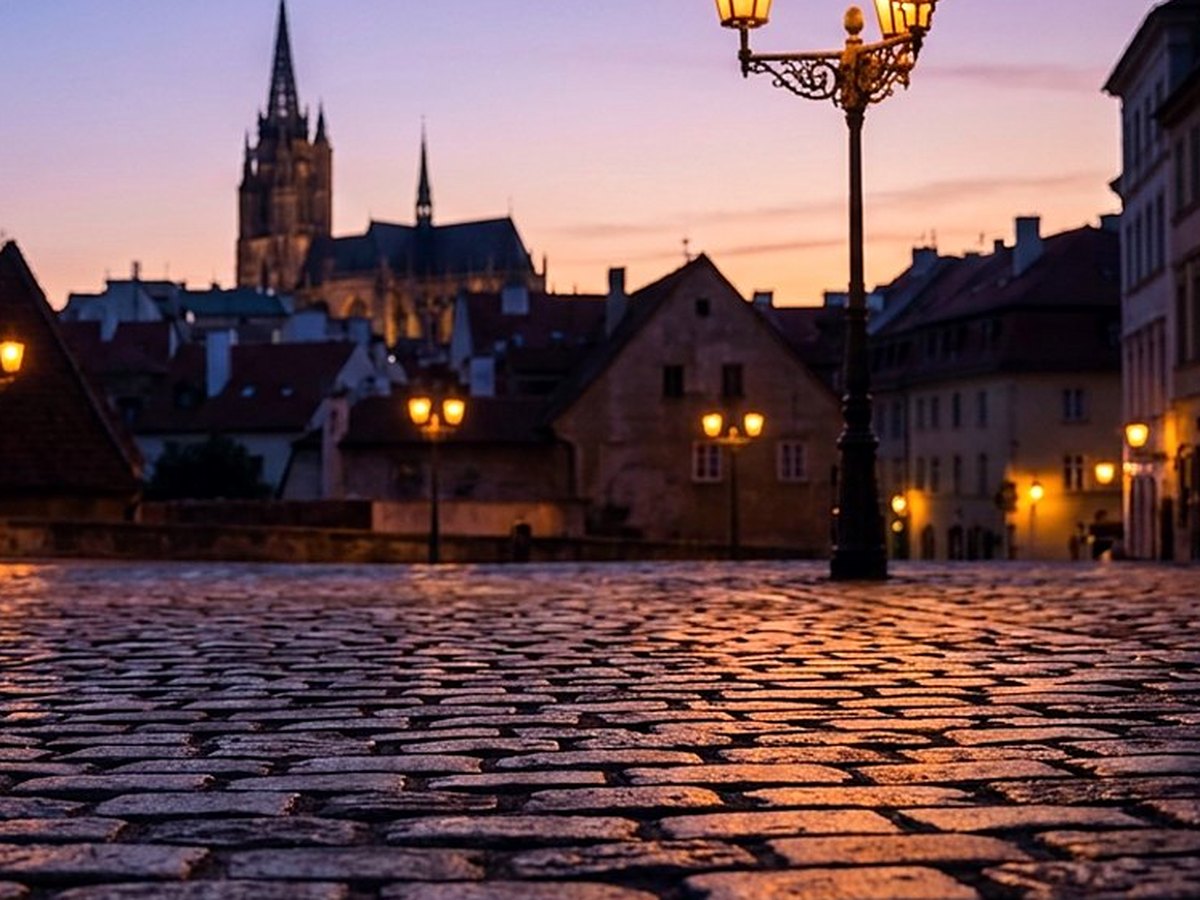
So I stand in the shade and look up at something lit, watching the line where light meets shadow travel down the building and making frames as it goes. The moment it reaches street level the day begins, the shadows shorten, and it all becomes ordinary daylight. On a clear morning in a dense old city I get perhaps twenty-five minutes from the first gold on a rooftop to the moment I go find breakfast.
Which season to pick, how to move at that hour, what is open
The season decides how civilized this is. Near the equinoxes, in late March or the second half of September, sunrise in most temperate cities lands at a reasonable hour and I can be back with a warm drink by eight. Midsummer at a northern latitude asks for four in the morning, and midwinter hands over a dawn you can walk to after a full night of sleep. Thin high cloud is a friend, since it lifts the sky and gives the sun something to color, while a flat gray lid gives nothing at all.
Moving is the easy part, because at that hour a city belongs to walkers. I plan every dawn as a loop on foot from where I am sleeping, twenty minutes out at the most, so no missed connection can wreck it. The first run of a local transit line is usually earlier than visitors expect and it is a fine way to reach a viewpoint across a river, though I check that first departure the night before rather than standing hopefully at a stop. If the route is quiet or unfamiliar, I tell somebody its shape and roughly when I will be back, and I stay on streets with lights on them.
What is near is the other reward. Bakeries and market halls are awake long before anything else, so the end of a dawn walk tends to land beside the one warm doorway open at that hour, with flour in the air and crates coming off a truck. Parks and formal gardens often unlock their gates around seven, which makes them a natural second act rather than a first. And the famous square I gave up on in the afternoon because of the crowds is worth another try now, empty, with the lamps still on and the light coming down the wall behind me.
Ida Fenwick
Writes and photographs this blog from Charleston, West Virginia. More about the blog.
Read next
-
Eating Well Without a Single Reservation
I used to book dinner two months before a trip and then rush across a strange city to keep the promise. Now I book nothing, walk more, and eat better than I ever did with a plan.
-
Train Days Across Europe: How I Build a Day on the Rails
I stopped planning trips as a list of cities and started planning them as a list of days, each one shaped by a single ride. Here is how those days get built.