Wandermio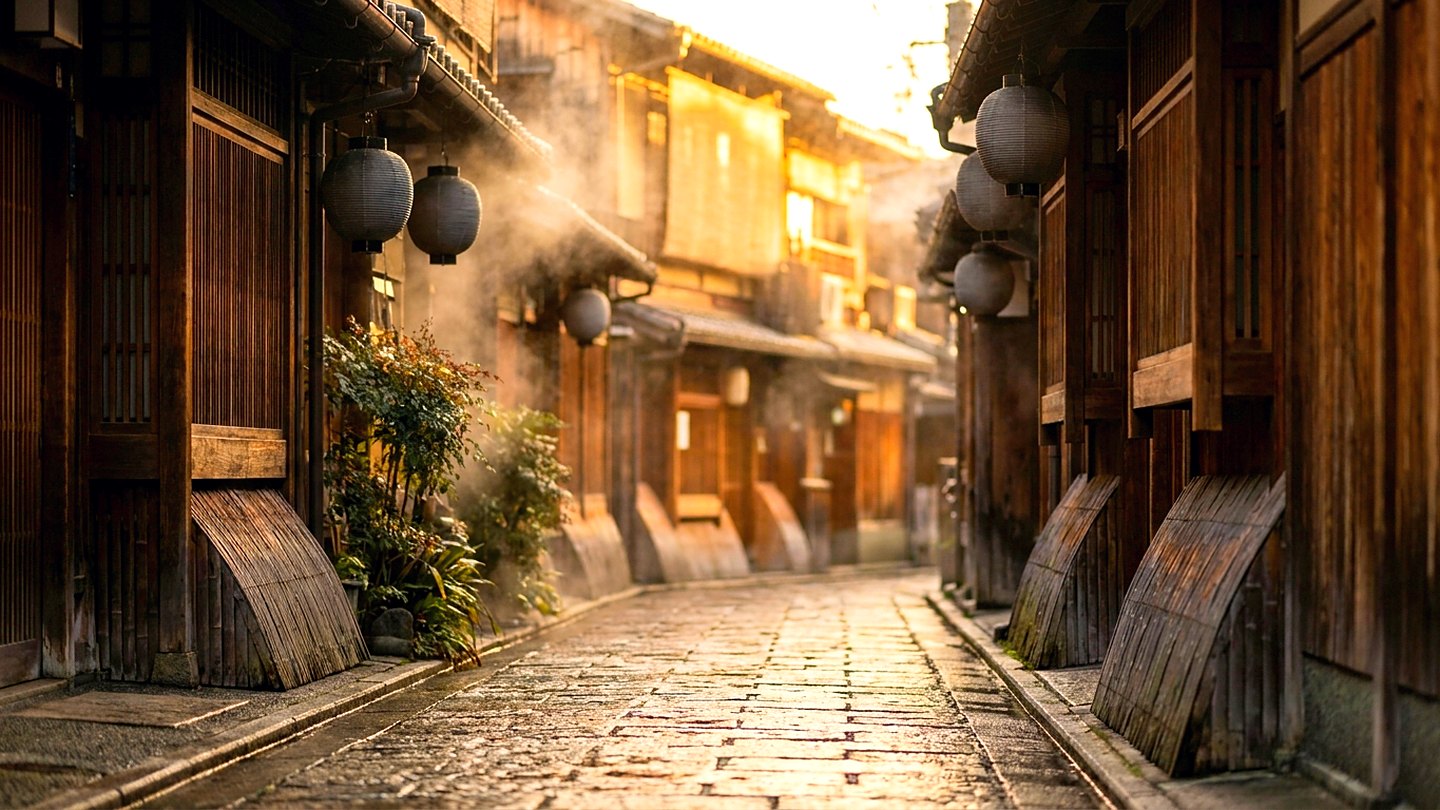
Kyoto at Six in the Morning, Before the Gates Open
Getting up at half past five in Kyoto feels like a mistake for about ninety seconds. Then you are outside, the air is at that early-spring temperature that gets in through your sleeves, and the street you walked last night with three hundred other people has nobody on it but a man watering the stones in front of his door. I did this eleven mornings in a row in March and never once regretted the alarm.
I did not plan it that way. Jet lag delivered me to the first one, the way it does, and I walked down to the river at six because there was nothing else to do with a body that thought it was afternoon. The Kamo was running low and loud. A heron stood in the shallows doing nothing in particular. Two runners went by. On the far bank the hills were a flat gray shape with no detail in them, and then over twenty minutes or so they filled in, ridge by ridge, like something being remembered. By the time I came back for breakfast the city had started, and I had already had my day.
Six in the morning is a different city
Kyoto is not a huge place, and that is exactly why the hour matters. The famous streets are narrow, the gardens are small, and the experience of both depends almost entirely on how many people are standing in them. At two in the afternoon in Gion you are in a slow-moving line between wooden facades. At six in the morning you are in a wooden street.
The change is not only a question of numbers. Sound goes first: no wheeled bags, no idling engines, no announcements. What is left is water in the gutters, a shutter going up, a bicycle bell, crows. Kyoto's crows are loud and everywhere and I grew fond of them by the fourth day. Then there is the smell, which at that hour is wet stone, cold cedar, and somebody's stove starting. For one hour the city belongs to brooms, bicycles, and crows, and if you are out in it you are the only person there who came from somewhere else.
For one hour the city belongs to brooms, bicycles, and crows.
Mist on the canal
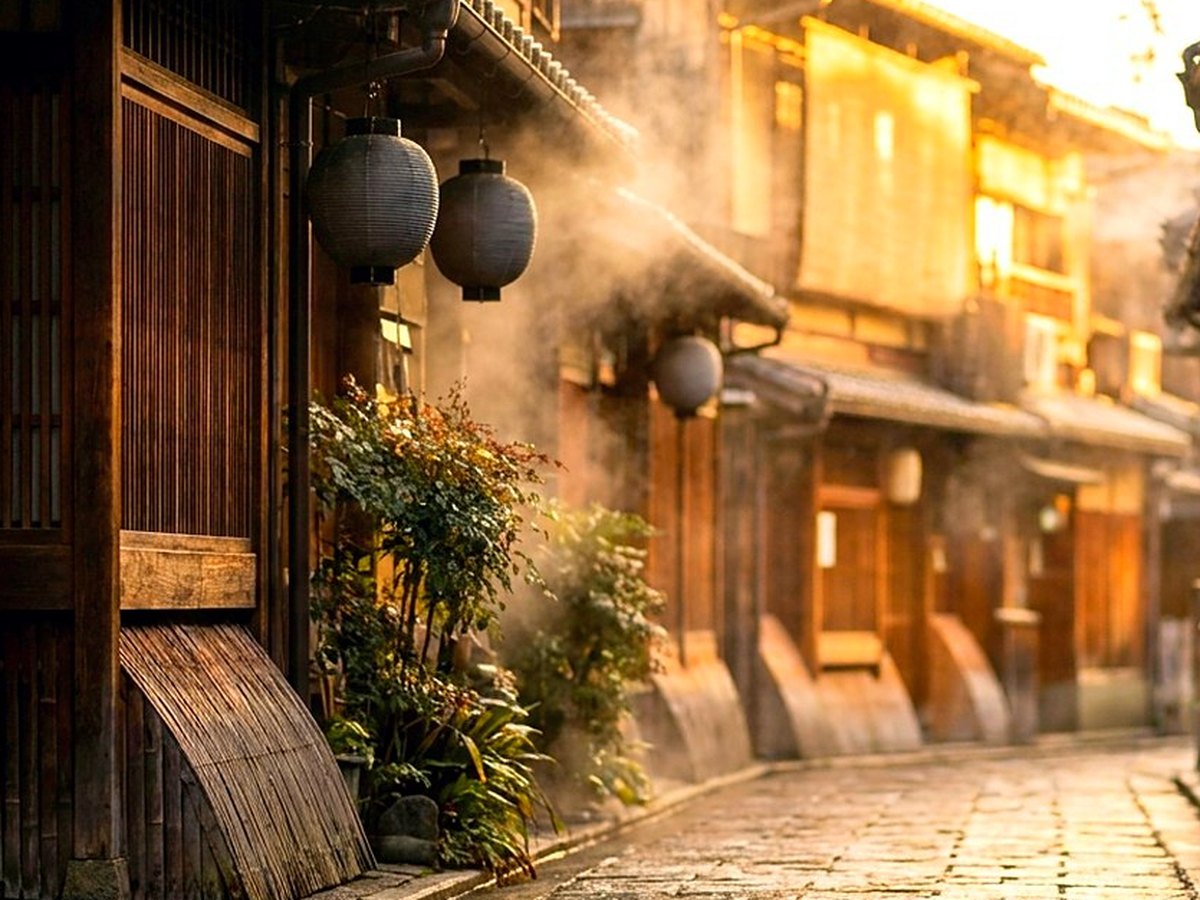
The Shirakawa is a canal about the width of a country lane, running through Gion between stone walls with willows leaning over it. In early March the willows are just going green and the water is cold enough that on the right morning it steams. I stood on one of the small stone bridges for twenty minutes watching mist come off it in slow ropes, and in that whole time four people crossed: two on bikes, one carrying a crate of vegetables, and a woman in her seventies sweeping the stretch of sidewalk outside her door with a short-handled broom.
Farther east, the Philosopher's Path follows another channel north from Nanzen-ji under cherry trees that in the first week of March are still hard black buds. Everyone comes here in April, and they are right to. In March at half past six it is a canal with ducks on it and a cat that follows you for a hundred yards and then loses interest. The stone is dark with dew. The houses are shuttered. Every so often a garden wall gives off a smell of camellia that stops you where you stand.
Moss, wood, and the sound of a broom
What I kept walking toward, morning after morning, was moss. Kyoto's gardens are built on it, and moss looks its best wet, which in early spring means at dawn, before the sun gets on it and dries the color out. Around the eastern temples there is moss on the tile caps of the walls and a green shade side to every stone lantern.
The brick aqueduct behind Nanzen-ji is the place I described to everyone I met afterward. It is a nineteenth-century water channel that runs straight through the temple grounds on tall arches, and at seven in the morning the light comes through those arches in slabs and the only sound is water moving overhead. From there a path climbs into the trees past small shrines with fresh water in the cups and yesterday's leaves swept into a pile.
Then there are the streets themselves. The stone lanes below Kiyomizu, photographed a thousand times a day, are steep and wooden and worn, and at that hour a shopkeeper is hosing the steps while delivery bicycles go by. Sweeping is the sound of a Kyoto morning: a soft, unhurried scratch coming from three doorways at once, in no shared rhythm, the way a city sounds when it is getting ready rather than performing.
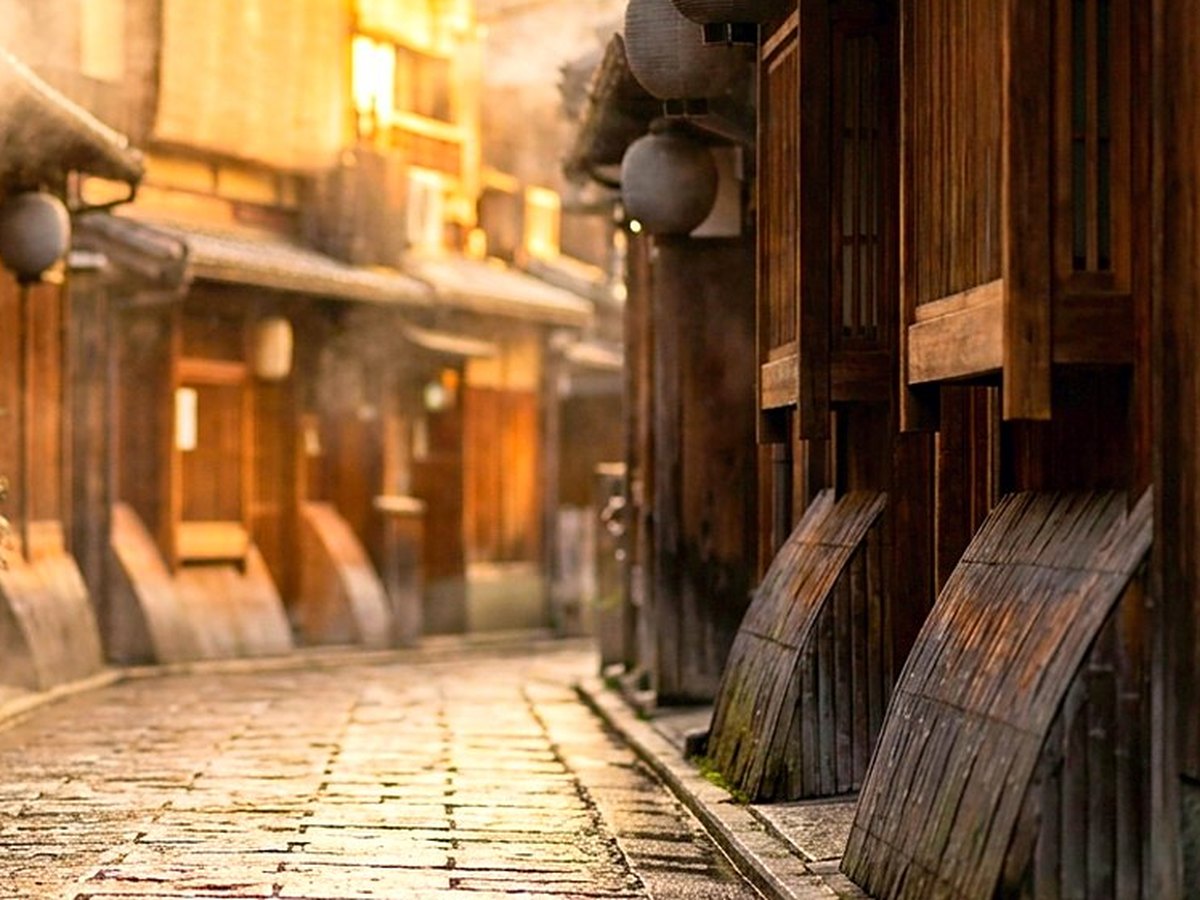
The hour before the gates open
Most temple gates open somewhere between six and eight, and the difference between arriving before and arriving after is the whole trip. Some of the larger complexes let you walk their grounds at first light, and the walk is the point: gravel, gates, and a bell being struck somewhere out of sight. The smaller places stay shut until eight or nine, but their outer walls, approaches, and stairways are public, and often that is the better half anyway.
So I learned to plan each morning backward from one opening time. Pick a garden that opens at eight, then spend the two hours before it walking there through streets that will be shoulder to shoulder by ten. You arrive as the gate slides back, you get the moss to yourself for half an hour, and by the time the first group is forming up at the entrance you are already on your way to breakfast.
Breakfast, by the way, is the reward, and it deserves the same planning. Small places near the markets open early and put out grilled fish, rice, pickles, and a bowl of soup that fixes cold hands in about a minute. I ate that eight mornings out of eleven and would happily do it again.
When to go, how to build a morning, and what is nearby
Early March is a quieter choice than most people make. The cherry crowds arrive in April, and the trees in early March are still bare, but the gardens are wet and green, the light is clean, and you can stand alone in places that will have a line snaking out of them a month later. Mornings are cold, in the thirties and forties, and afternoons climb into the fifties, so a warm layer you can peel off matters more than a heavy coat. Sunrise falls around six, which is a civilized hour to aim at.
Build the morning on foot and let the buses and trains bring you home. The eastern hills and the north-to-south spine of the city are walkable, and walking is how the small things show up: a doorway, a smell, an alley cat with opinions. Distances that look long on a map usually turn out to be thirty or forty minutes. Bicycles are the local answer and the city is flat enough to make that easy. From about eight the buses fill, so I made a habit of walking out and riding back, which also meant I never spent a morning standing on a corner waiting.
For a morning farther out, the bamboo groves at Arashiyama repay the early train for the same reason everything else does: at seven they are a quiet path and by ten they are not. Fushimi Inari, south of the city, never closes, and the upper stretches of the gate path clear out entirely if you keep climbing for twenty-five minutes. North of town, Ohara sits in a valley of small temples and terraced fields about an hour away. Uji, to the south, is a river town built around tea, with an hour of walking along the water that most visitors never get to.

Ida Fenwick
Writes and photographs this blog from Charleston, West Virginia. More about the blog.
Read next
-
Seven Days on Iceland's Ring Road, Early Summer
Last June I drove the whole loop in seven days and learned that the driving was not the space between the good parts. It was the good part.
-
Tile Hunting in Lisbon, One Facade at a Time
I spent a week in Lisbon looking at walls instead of views, and the city rearranged itself around that one decision. Here is what the tile is for and how to time a morning so the patterns actually show.